
Reliability is one of the most critical factors when choosing a hosting solution. Whether you’re running a business website, ecommerce store, or application, downtime can lead to lost revenue, poor user experience, and damage to your brand reputation. This makes choosing the right hosting infrastructure essential.
A common question businesses ask is: why is cloud VPS more reliable than traditional VPS? The answer lies in distributed infrastructure, redundancy, and advanced failover mechanisms that cloud-based systems provide.
Providers like HostingSource offer cloud VPS hosting solutions designed to deliver high reliability, ensuring continuous uptime and stable performance.
What Is Traditional VPS Hosting?
Traditional VPS hosting uses a single physical server divided into multiple virtual servers. Each VPS operates independently but relies on the same physical machine.
While this setup offers better performance than shared hosting, it has limitations:
- Dependency on one physical server
- Limited redundancy
- Risk of downtime if the server fails
What Is Cloud VPS Hosting?
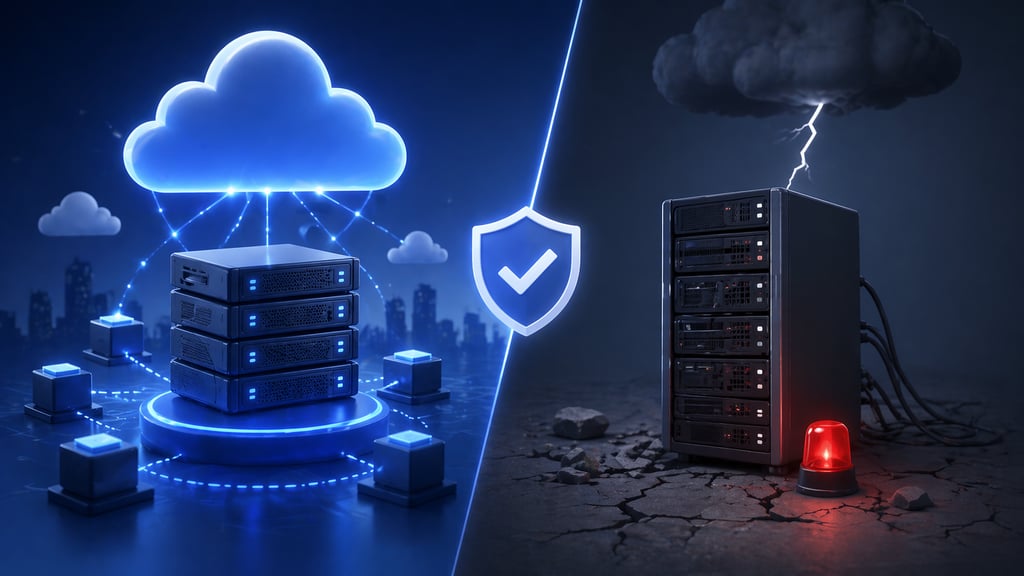
Cloud VPS hosting is built on a network of interconnected servers. Instead of relying on one machine, your VPS operates within a distributed system.
Resources such as CPU, RAM, and storage are spread across multiple servers, ensuring better performance and reliability.
HostingSource uses cloud infrastructure to provide VPS hosting solutions that minimize downtime and maximize performance.
Why Is Cloud VPS More Reliable Than Traditional VPS?
1. Distributed Infrastructure
Cloud VPS operates on multiple servers rather than a single machine.
- Workloads are distributed across nodes
- Failure of one server does not affect the system
- Continuous service availability
In contrast, traditional VPS depends on one server, making it more vulnerable to failure.
2. Built-In Redundancy
Cloud VPS environments include redundancy at multiple levels:
- Data replication across servers
- Backup systems for hardware components
- Multiple network paths
This ensures that even if one component fails, another takes over instantly.
3. Automatic Failover
One of the biggest advantages of cloud VPS is automatic failover.
- If a server fails, workloads are shifted to another server
- No manual intervention required
- Minimal downtime
Traditional VPS lacks this capability, leading to potential downtime.
4. High Uptime Guarantees
Cloud VPS providers often offer uptime guarantees of 99.9% or higher.
- Continuous monitoring ensures stability
- Issues are detected and resolved quickly
Traditional VPS uptime depends on a single server’s health.
5. Scalability Without Downtime
Cloud VPS allows instant scaling of resources:
- Add CPU, RAM, or storage in real time
- Handle traffic spikes without performance issues
Traditional VPS scaling may require downtime or migration.
6. Data Replication and Backup
Cloud VPS replicates data across multiple servers.
- Data remains accessible even during failures
- Reduced risk of data loss
Traditional VPS typically stores data on a single server, increasing risk.
7. Load Balancing
Cloud VPS uses load balancing to distribute traffic across servers.
- Prevents overload on a single server
- Ensures consistent performance
Traditional VPS does not have built-in load balancing.
8. Advanced Monitoring and Maintenance
Cloud VPS environments include real-time monitoring systems.
- Detect issues early
- Prevent downtime
- Optimize performance
HostingSource integrates advanced monitoring tools into its cloud VPS solutions.
Cloud VPS vs Traditional VPS: Reliability Comparison
| Feature | Cloud VPS | Traditional VPS |
|---|---|---|
| Infrastructure | Multiple servers | Single server |
| Redundancy | High | Limited |
| Failover | Automatic | Manual/None |
| Uptime | Very high | Moderate |
| Scalability | Instant | Limited |
| Data Protection | Replicated | Single location |
Cloud VPS clearly offers superior reliability.
Benefits of Cloud VPS Reliability for Businesses
Reduced Downtime
Continuous availability ensures uninterrupted operations.
Better User Experience
Reliable performance leads to faster loading and smoother interactions.
Improved Revenue
Minimizing downtime prevents loss of sales and opportunities.
Enhanced SEO Performance
Search engines favor websites with consistent uptime.
Use Cases for Cloud VPS Hosting
Ecommerce Platforms
Require high uptime for transactions.
SaaS Applications
Need continuous availability for users.
High-Traffic Websites
Benefit from load balancing and scalability.
Enterprise Systems
Require reliable infrastructure for critical operations.
How HostingSource Ensures Cloud VPS Reliability
HostingSource provides cloud VPS hosting solutions designed to deliver maximum reliability. By leveraging distributed infrastructure, redundancy, and advanced failover systems, HostingSource ensures continuous uptime and stable performance.
The platform offers:
- High availability architecture
- Real-time monitoring
- Scalable resources
- Reliable data protection
HostingSource helps businesses maintain consistent performance and avoid downtime.
When Should You Choose Cloud VPS Over Traditional VPS?
Choose cloud VPS if:
- You need high uptime
- Your business cannot afford downtime
- You expect traffic growth
- You require scalability
- You want better data protection
Conclusion
Understanding why cloud VPS is more reliable than traditional VPS highlights the importance of modern hosting infrastructure. With distributed systems, redundancy, automatic failover, and real-time monitoring, cloud VPS provides a highly reliable hosting environment.
For businesses that depend on continuous uptime and performance, cloud VPS is the preferred choice. Providers like HostingSource offer cloud VPS solutions designed to deliver reliability, scalability, and efficiency.
Frequently Asked Questions
Why is cloud VPS more reliable than traditional VPS?
Because it uses multiple servers, redundancy, and automatic failover to ensure continuous uptime.
Is cloud VPS better than traditional VPS?
Yes, especially for reliability, scalability, and performance.
What is failover in cloud VPS?
It is the automatic transfer of workloads to another server during failure.
Who should use cloud VPS?
Businesses with ecommerce platforms, SaaS applications, and high-traffic websites.